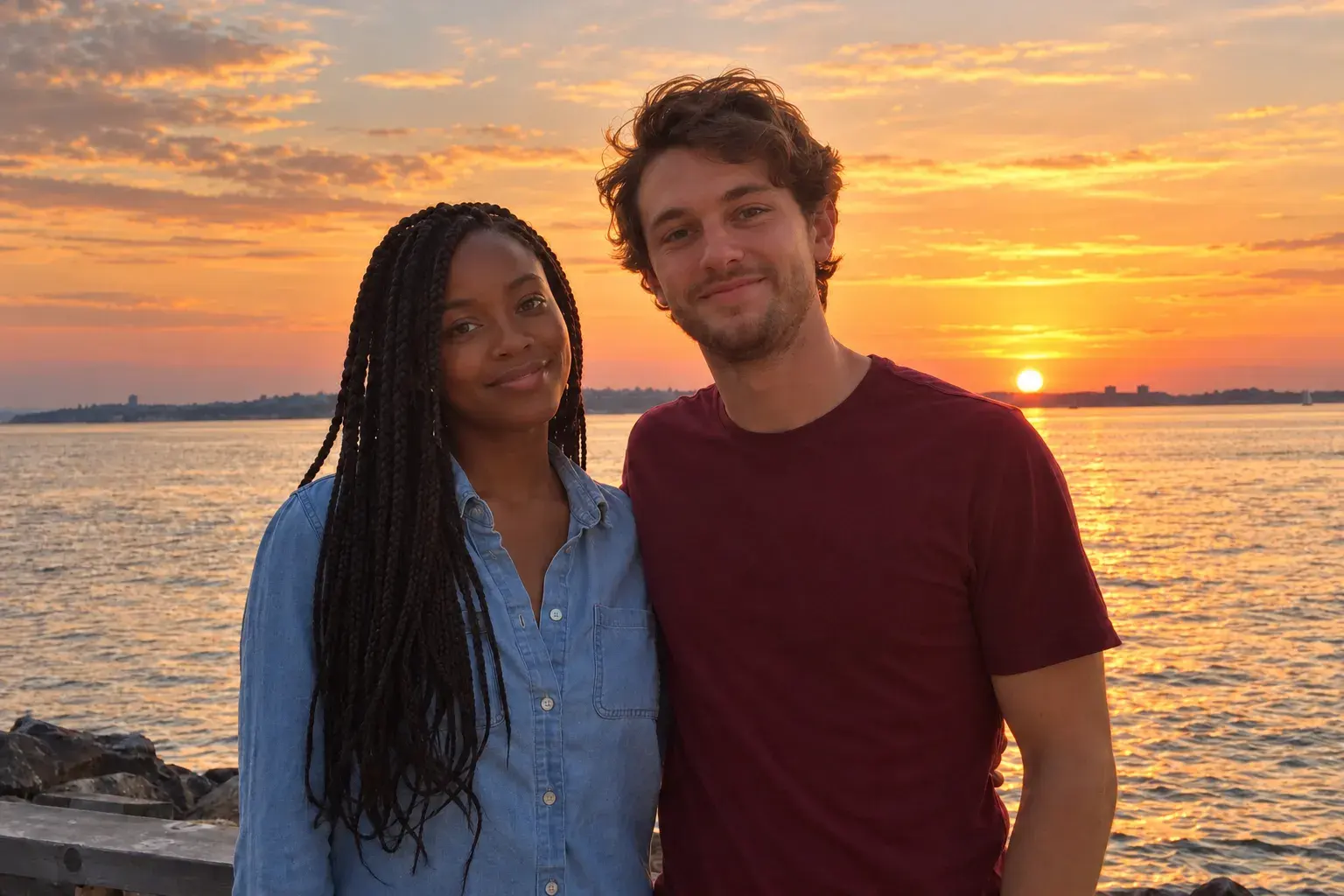
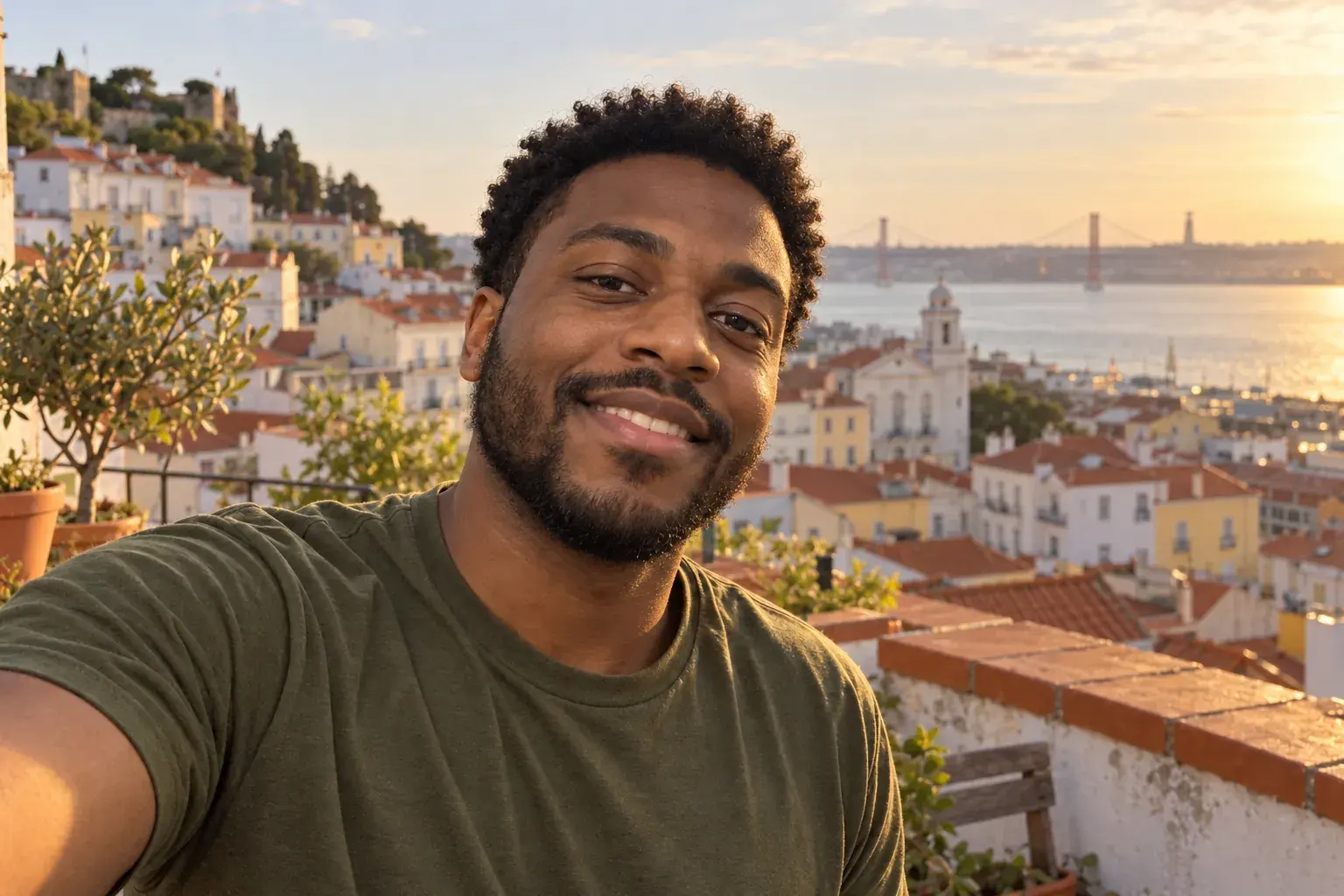
Smiling vs not smiling on Bumble: a detailed breakdown
There's an evergreen Reddit debate: do you smile in your dating photos or do you go for the moody, serious look? On Bumble specifically, the answer is decisive — but the reason is not the one usually given.
Key takeaways
- 01Bumble skews toward approachability more than other apps because women message first and are filtering for low-effort signals
- 02Smile photos outperform serious photos on Bumble photo 1 by a large margin
- 03But: full-fake-smile photos underperform genuine half-smile photos
- 04On photos 3–6, the smile rule loosens — variety wins
Why Bumble is different
On Tinder, the algorithm rewards swipe rate symmetry — your profile gets shown more if both sides swipe right. On Bumble, women have to message first, which means they're not just deciding 'is this person attractive enough' — they're deciding 'is this person worth me writing the first message to.'
That second question is filtered for differently. The viewer is looking for evidence of 'this person seems easy to talk to' — and a smile is the cheapest, most legible signal of that.
Smile vs serious: the actual data
When matched against each other in the same lighting and framing, photo 1 with a genuine smile beats the serious-look photo by roughly 30–50% in match rate on Bumble. On Tinder, the gap is smaller — closer to 10–20%. On Hinge, it's smaller still.
But the difference between 'genuine smile' and 'tight performative smile' is also large — almost as large as the gap between smile and no-smile. A bad smile photo is closer to a no-smile photo than to a genuine-smile photo.
How to get a genuine smile photo
The reliable trick is the burst-mode laugh. Have someone aim a phone, set it to burst mode (hold the shutter), and then say something funny. You'll get 30 frames, 28 of them mid-blink or mid-word, and 2 of them where the laugh is just turning into a smile. That's the photo.
The bad version of this is to try to pose a smile in a mirror. The brain detects performative smiles within milliseconds. The 'frozen smile' photo is so common in failed dating profiles that it's almost a meta-signal — viewers register 'this person tried hard.'
Where smiling stops mattering as much
Photos 3–6 of your profile are where you build texture: a hobby photo, a travel photo, a 'doing something' photo. Smiling matters less here because the viewer has already decided you're approachable based on photo 1. Now they're looking for personality.
A serious-look photo at position 4 — say, you doing something focused and competent — actually adds depth. Same photo at position 1 is a profile killer.

Try this on your own photo
Turn it into a better photo, or a video.
Bring the shot with the right moment and the wrong light. Magnt fixes the light, color and sharpness, then can bring it to life as a 5 or 10 second clip. Still looks like you.
Bumble-specific photo 1 audit
Three checks for your current Bumble photo 1:
- Are your eyes actually crinkling? If your eyes look the same as in your serious-look photo, your smile is performative.
- Are you looking at the camera? Off-camera 'candid' shots underperform on Bumble specifically.
- Is the photo taken from above slightly or below slightly? Above-slight outperforms — it tends to make the smile more readable.